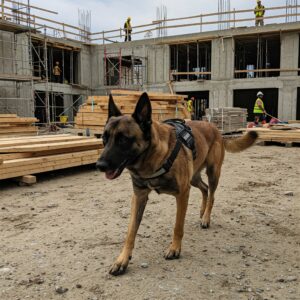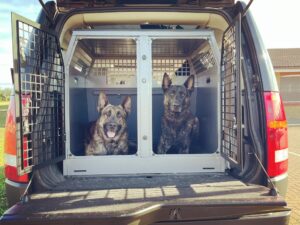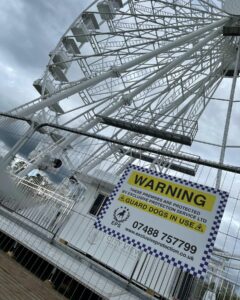
There are sites where the most cost-effective option on four legs has a tail. A trained security dog and handler can cover ground that would otherwise need several static guards, and the deterrent effect is hard to match.
Where dogs come into their own
Large or open sites are the obvious case. Construction yards, vacant commercial property, industrial estates, and rural locations all present the same headache: too much ground, too few staff, and plenty of dark corners. A single NASDU-qualified handler with a dog can patrol effectively and detect intruders far sooner than a guard relying on sight alone.
Events benefit too. A visible dog unit at a perimeter sends a clear message and tends to make would-be troublemakers think twice before they start.
Deterrence first, detection second
Most of the value is preventative. The presence of a security dog deters the opportunist before anything happens — and in the rare event someone does press on regardless, detection and response are immediate. It’s a layer of security that’s genuinely difficult to talk your way past.
Training and welfare matter
This is where standards separate the professional from the chancer. EPS handlers are NASDU qualified, and the dogs are trained, assessed, and properly cared for. Welfare isn’t an afterthought; a well-handled, healthy dog is a more reliable and more controllable asset. Cut corners on training and welfare and you don’t have a security measure — you have a liability.
Knowing when it’s the right call
Dogs aren’t the answer to every job. The right approach depends on the site, the threat, and the practicalities. Sometimes a static team is the better fit; sometimes a dog unit does the work of several guards at a fraction of the cost. An honest assessment up front saves money and avoids overcommitting.
Not sure whether a dog unit suits your site? Contact us and we’ll give you a straight answer based on what the job actually requires.